

hajichi
はぢち
ハヂチ

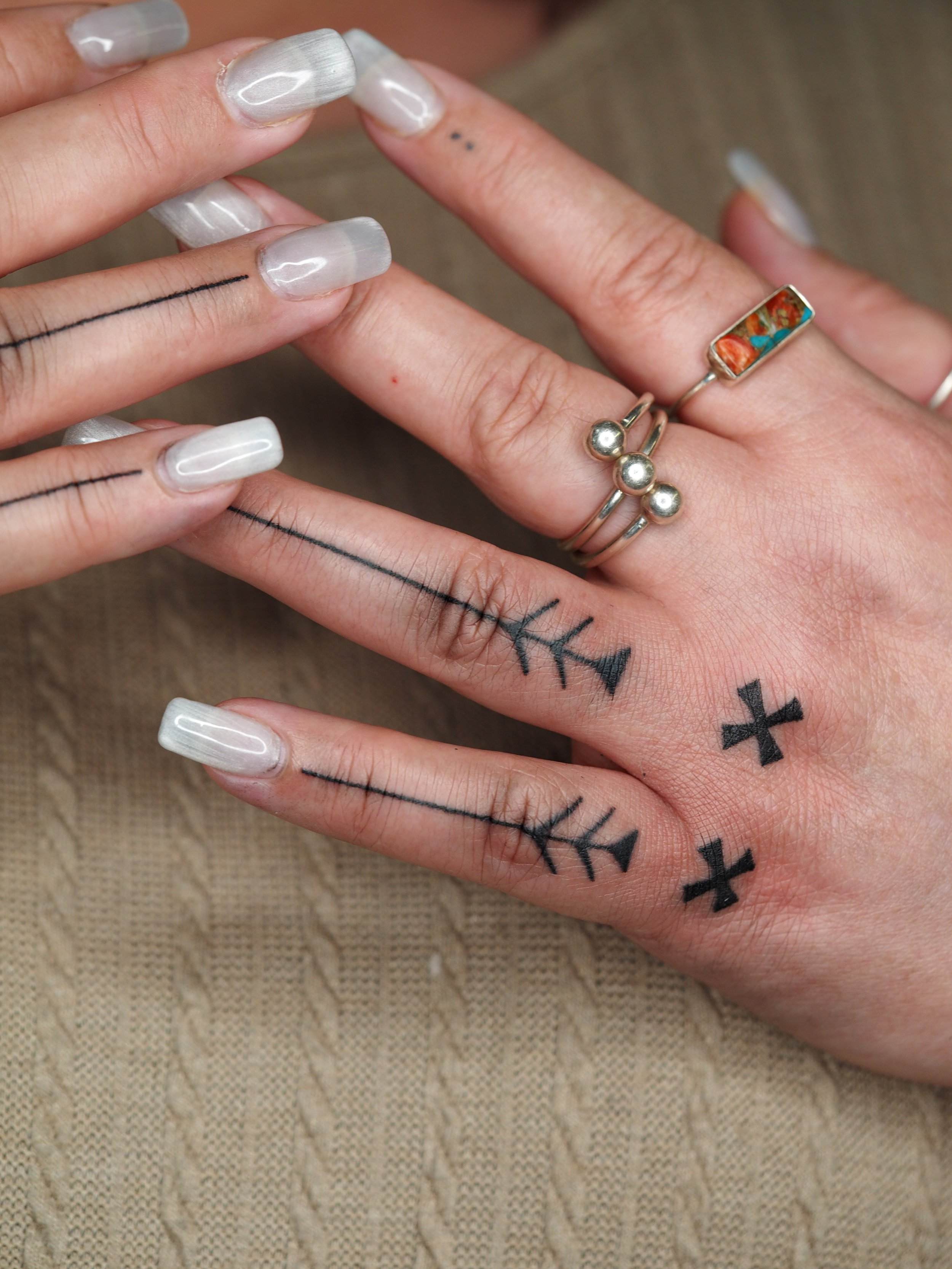
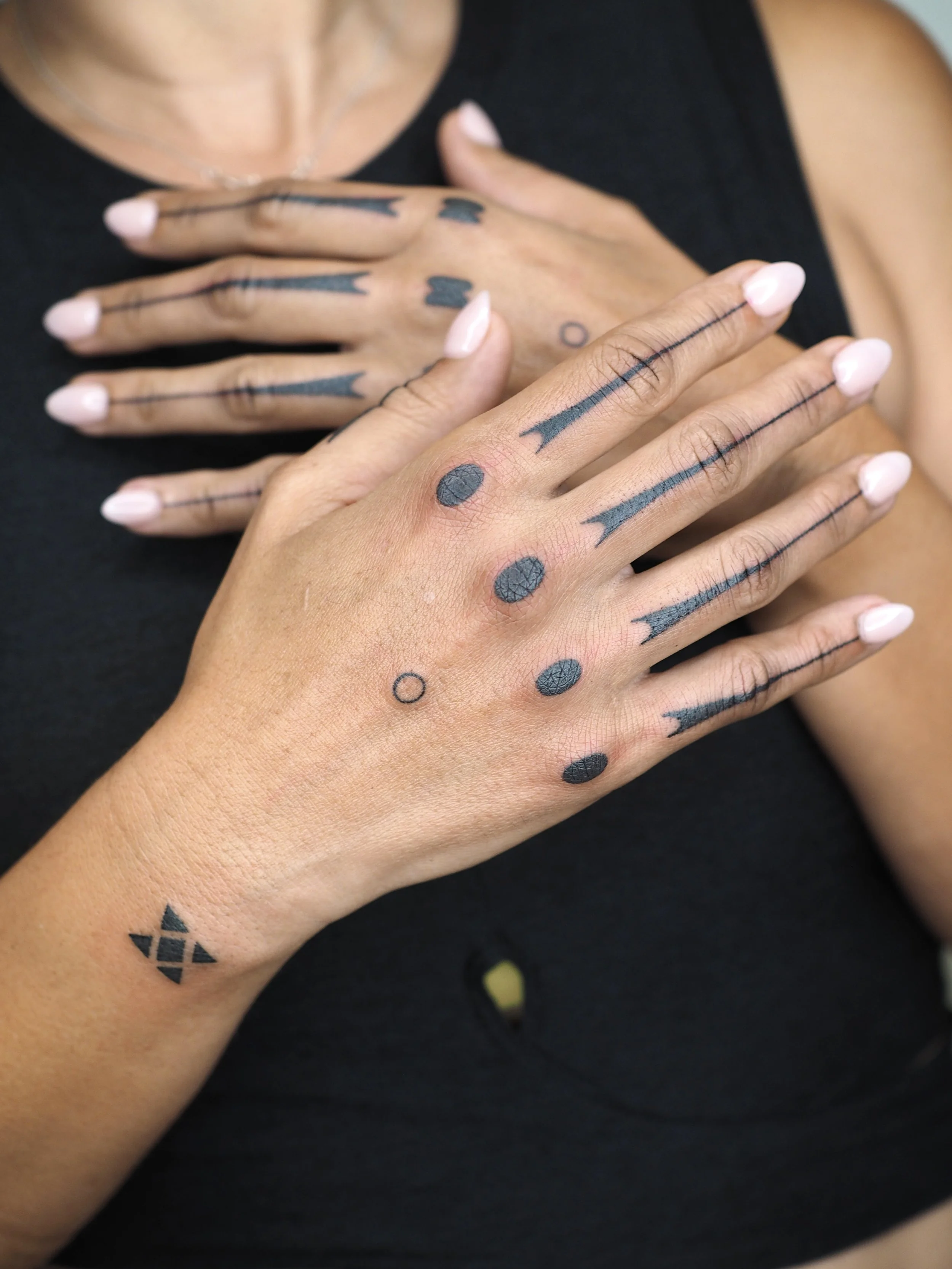
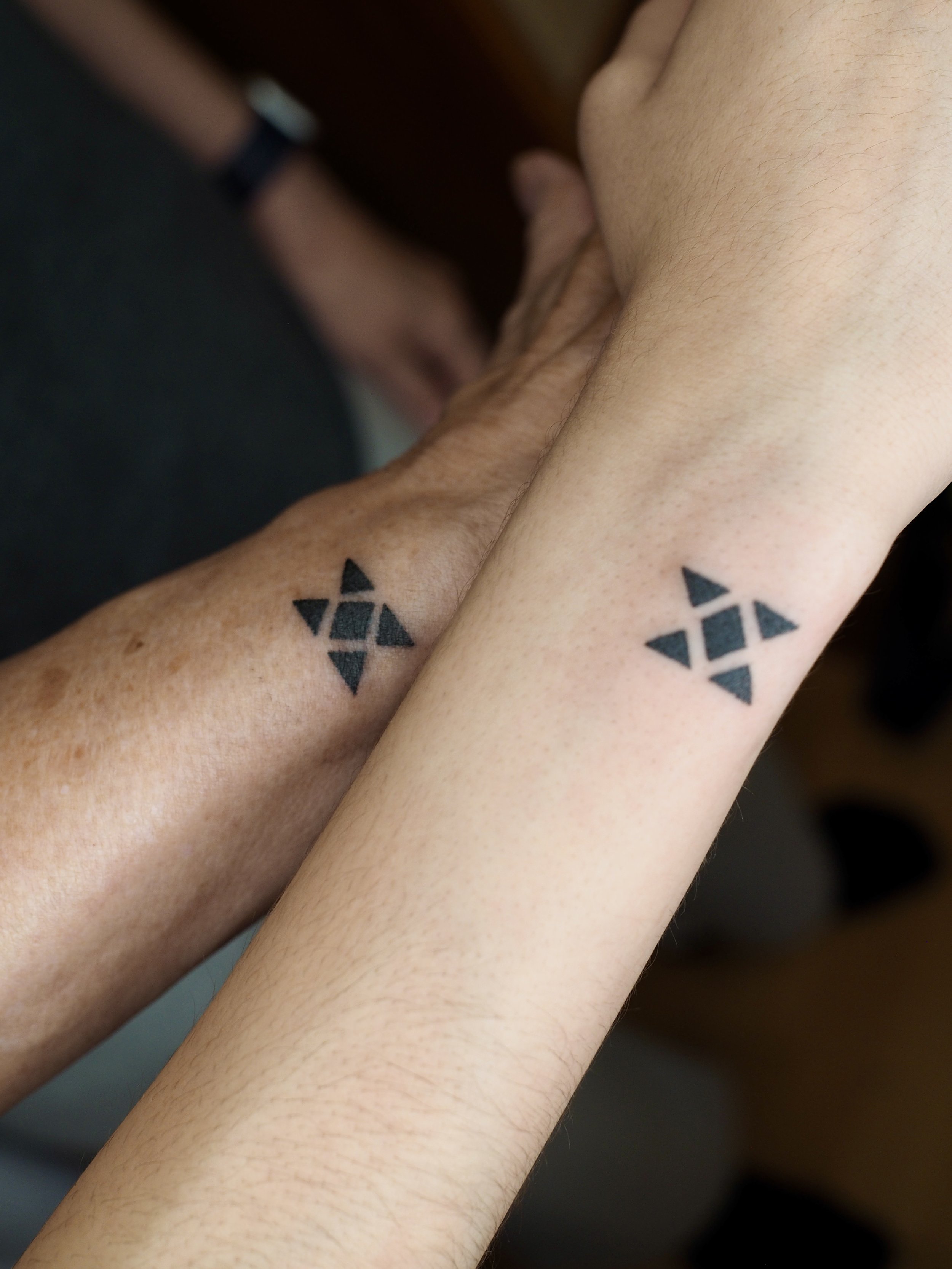

Hajichi is the Okinawan word for the traditional tattooing practice of the Ryuukyuu/Ruuchuu Islands (now known as Okinawa prefecture in Japan due to colonization). Other Ryuukyuuan languages have different words for the practice: Pajichi, Hazuki, Hanzuki, Pizutsuku, Paitsuki, Tiku, Tishiki, etc. The styles and meanings vary based on the island.
Hajichi was traditionally practiced by and for women specifically. The tattoos were usually located on the hands, wrists, and sometimes arms. These tattoos had various social and spiritual purposes: protection when entering the afterlife, markers of important life events (like marriage or having children), achieving milestones in weaving, etc. Women usually started receiving their first pieces of hajichi in childhood/adolescence and acquired more symbols throughout their lifetime.
Part of my tattoo practice now focuses on reviving this endangered practice (it was outlawed in 1899 by the Japanese government). I tattoo these symbols for women and genderqueer individuals of Okinawan/Ryuukyuuan descent. You can also find our international collective of hajichaa (hajichi practitioners) on Instagram: @hajichiaa